
Inquiry
Form loading...

7 Tips for Buying Polyurethane Stone Globally

Buying Polyurethane Stone across borders can look simple on a supplier’s website. A textured wall panel appears in one photograph, with a convenient price beside it. Real purchasing decisions are less tidy. Color, density, fire performance, packaging, and shipping conditions can change the final result.

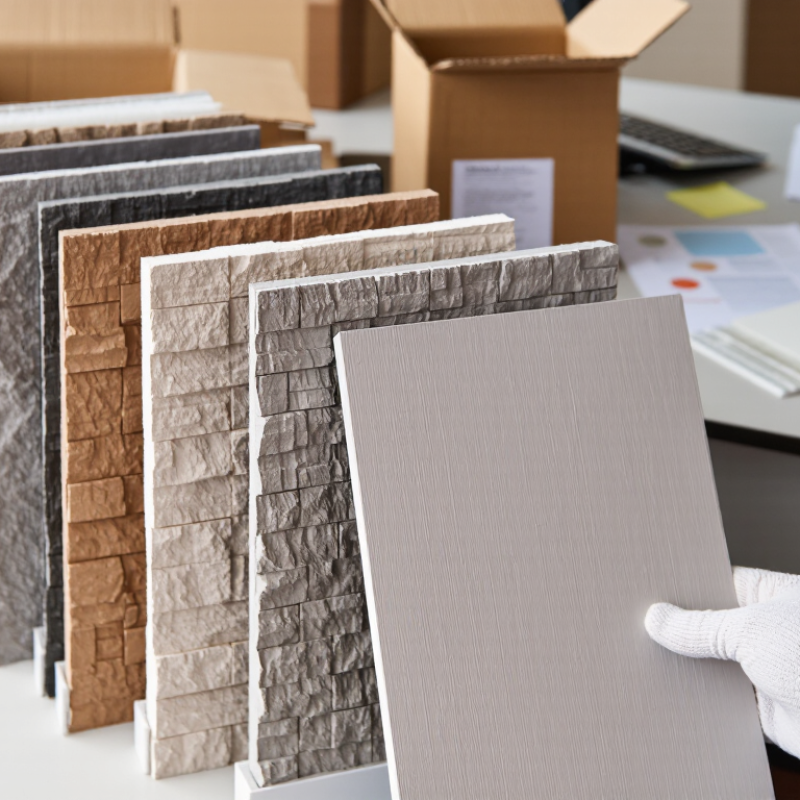
This guide presents seven practical tips for evaluating Polyurethane Stone globally. It focuses on details that experienced buyers often check before placing a large order. Request physical samples, not only digital images. Hold the panel under natural light. Press the surface gently. Check whether the texture feels consistent and whether edges remain straight after handling.

Details matter. Ask for technical data, production records, and current test reports. Confirm the material’s intended use, installation method, and maintenance requirements. Fire classifications and building standards differ between markets, so local professionals should review the documents. A supplier’s certificate may be genuine yet unsuitable for your destination. Do not guess.

Reliable suppliers should explain lead times, minimum order quantities, protective packaging, replacement policies, and delivery terms clearly. It is also wise to compare a small trial shipment with the promised specifications. Some buyers focus heavily on unit price and overlook port fees, damage risks, or inconsistent batches. That mistake is easy to make. I have seen attractive samples create unrealistic expectations when production scale changed the finish. This guide cannot replace independent inspection or local regulatory advice, but it can help buyers ask sharper questions, reduce avoidable surprises, and choose with greater confidence.
7 Tips for Buying Polyurethane Stone Globally

Defining Polyurethane Stone Specifications for Global Projects

Defining polyurethane stone specifications is the safest starting point for global projects. A visual sample alone cannot confirm performance. Record panel length, width, thickness, weight, density, texture, and color tolerance in the purchase document. Metric units reduce confusion between factories and installation teams.

Measure twice. I have seen projects delayed because a “standard” panel differed by several millimeters. Request moisture absorption, UV resistance, thermal movement, and applicable fire-test reports. Also confirm the testing method and report date. Requirements may vary by destination, so local building codes must guide final approval. Do not accept vague terms like “weatherproof” without measurable limits.

Details matter. Specify fixing points, adhesive compatibility, joint width, corner pieces, and replacement-unit availability. For coastal sites, ask about salt exposure and protective coatings. For cold regions, confirm the service temperature range and freeze-thaw performance. Packaging deserves equal attention: define crate dimensions, stacking limits, edge protection, and labeling language. A damaged corner can cost more than its replacement.

Before production, approve a physical sample under daylight and indoor lighting. Compare several pieces, not just one. Natural-looking variation may be desirable, but uncontrolled variation can weaken the design. Keep signed drawings, batch numbers, inspection photos, and packing records. This paperwork feels excessive until a shipment arrives with inconsistent color or missing accessories. Even experienced buyers miss small details. Reflect on them before placing the final order.


Evaluating Suppliers, Certifications, and Manufacturing Standards

Buying polyurethane stone across borders requires more than a polished sample. Ask suppliers for their factory address, production capacity, and recent batch records. Request photos of molds, curing areas, and packaging before payment. A reliable supplier explains density, dimensional tolerance, fire behavior, and surface coating in plain language. Vague answers deserve a pause. My practical mistake was trusting a catalog image; the delivered texture looked different under warehouse lighting.

Check certifications carefully. A certificate should show the legal manufacturer, test method, issue date, and testing laboratory. Verify the document through the issuing body, not only through an emailed PDF. For fire performance, request the exact classification and specimen thickness. Standards such as ASTM or EN may apply differently by market. Match testing to the installation country. Compare safety data sheets and performance declarations. Paperwork can be incomplete. Treat that as a risk signal.

Evaluate manufacturing controls during a video audit or site visit. Look for calibrated scales, recorded mixing ratios, controlled curing temperatures, and inspection logs. Ask how rejected panels are separated and how color batches are matched. Confirm pallet protection, moisture barriers, carton labels, and replacement procedures for transit damage. Order a small trial shipment first. Measure weight, thickness, odor, edge quality, and color after unpacking. Keep written records of every promise. Suppliers may sound professional, yet production details sometimes reveal weak quality control.

7 Tips for Buying Polyurethane Stone Globally

This 100-point scorecard is a practical procurement model for comparing polyurethane stone suppliers. It prioritizes product specifications, quality controls, certification evidence, material traceability, compliance, and delivery reliability. Relevant references may include ISO 9001, ISO 14001, REACH, RoHS where applicable, and product-specific ASTM or EN test methods.

Comparing Prices, Materials, Minimum Orders, and Shipping Terms

7 Tips for Buying Polyurethane Stone Globally

Compare the complete price, not only the factory quotation. Include tooling, packaging, inspection, insurance, duties, and inland delivery. A low unit price can become expensive after shipping. Request a sample before discussing large quantities. Check its surface texture, weight, color consistency, and edge strength. Measure twice. Polyurethane stone should match the project’s required density and thickness. Ask for technical data on moisture resistance, UV stability, fire performance, and installation temperature. Do not accept vague claims without test documents or clear testing methods.

Minimum order quantities often change the real cost. A supplier may offer a discount, but excess stock can tie up cash for months. Ask whether mixed colors, profiles, or sizes count toward one order. Confirm production time in writing. I once underestimated packaging volume and paid more for freight than expected. That mistake still influences my purchasing checks. Ask again. Clarify whether replacement pieces are available for damage or color variation.

Shipping terms need careful comparison. Confirm the exact Incoterm, loading port, carton dimensions, pallet weight, and estimated transit time. Request photos of export packaging, especially for fragile molded edges. Compare sea, rail, and air options using landed cost per usable piece. Review payment stages and documentation requirements before approving production. A written quotation should state currency, validity period, tolerances, warranty limits, and responsibility for transit damage. Some suppliers answer quickly but provide incomplete details. Treat that as a warning, not a minor inconvenience.

Verifying Samples, Product Quality, and Customization Options

7 Tips for Buying Polyurethane Stone Globally

A sample is evidence, not a guarantee. Request three pieces from the current production batch, not only a showroom sample. Compare color, edge sharpness, surface texture, weight, and dimensions under daylight. A perfect sample can still hide a weak production process.

Quality checks should match the stone’s final location. Ask for density, water absorption, dimensional stability, surface hardness, and abrasion results. ASTM D2240 can help assess hardness, while ASTM D4060 supports abrasion testing. For outdoor use, request accelerated weathering data under ISO 4892-3. Grand View Research valued the global polyurethane market at about USD 78.3 billion in 2022, with construction remaining a major application sector. Large markets do not remove the need for batch-level testing.

Customization needs written limits. Confirm mold drawings, texture depth, color tolerance, thickness, fire performance, packaging, and acceptable defects. Ask who owns the tooling and how revisions are approved. The 2024 Global Status Report for Buildings and Construction reported that buildings generated approximately 37% of global energy-related emissions and process emissions. Lightweight polyurethane stone may reduce handling and transport demands, but its environmental value depends on durability and replacement frequency. I would also inspect one failed sample, if available. Suppliers rarely volunteer it. That omission deserves a second question.

7 Tips for Buying Polyurethane Stone Globally - Verifying Samples, Product Quality, and Customization Options

Buying Tip What to Verify Practical Quality Checkpoints Evidence to Request Customization and Commercial Questions
1. Approve a representative sample Confirm that the sample uses the same polyurethane formulation, surface texture, reinforcement, coating, and manufacturing process as the proposed production order. Check color consistency, stone pattern, edge definition, dimensional accuracy, surface defects, odor, visible bubbles, warping, and overall weight. Compare samples under both daylight and indoor lighting. Request a dated, signed sample approval sheet with photographs, drawings, dimensions, finish description, and an agreed tolerance schedule. Ask whether the approved sample becomes the visual and technical reference for mass production and how sample changes are controlled.
2. Verify material composition and density Confirm that the product is polyurethane-based and clarify whether it is rigid polyurethane, integral-skin polyurethane, or a polyurethane composite with fillers or reinforcement. Require the declared density range, hardness method, moisture condition, and test temperature. Density and hardness should be consistent across production lots according to agreed limits. Request a technical data sheet, safety data sheet, batch specification, and recent third-party or internal test results showing the test methods and sample conditions. Confirm whether changing density, wall thickness, mineral filler, or reinforcement affects price, lead time, machining, fastening, or shipping weight.
3. Test durability for the intended application Match the product specification to its use: interior décor, exterior cladding, landscaping, wet areas, commercial spaces, or temporary displays. Evaluate impact resistance, abrasion resistance, water absorption, UV exposure, temperature cycling, coating adhesion, and resistance to commonly used cleaning agents where relevant. Request test reports that identify the standard or method used, specimen dimensions, exposure duration, pass/fail criteria, and whether testing applies to the finished surface rather than only raw material. Ask for a written warranty covering the actual installation environment. Do not treat a general material warranty as proof of suitability for outdoor or high-moisture use.
4. Confirm dimensional and finish consistency Verify length, width, thickness, flatness, hole location, joining details, color variation, and texture repeat across different production batches. Establish measurable tolerances in millimeters. Check a statistically reasonable number of pieces from each lot rather than approving only one visually perfect item. Request an inspection plan, quality-control checklist, dimensional inspection record, and high-resolution photographs of packed and unpacked goods. Clarify whether custom molds, CNC trimming, hand-finishing, or color matching are included in the quoted price and how tooling revisions are charged.
5. Review customization capabilities Confirm available options for dimensions, stone texture, color, gloss level, edge profile, mounting system, cut-outs, embedded parts, and protective coating. Check whether the requested design can be produced repeatedly without thinning weak areas, creating sharp stress points, trapping air, or reducing coating coverage. Request a production drawing, 3D file requirements, mold-flow or feasibility feedback when needed, a prototype schedule, and a written change-approval process. Confirm minimum order quantity, tooling ownership, tooling storage period, prototype charges, repeat-order pricing, and the expected service life of the mold.
6. Check safety, compliance, and installation requirements Identify the regulations and building requirements of the destination market, especially for fire performance, chemical content, indoor air quality, and public-space installation. Verify that fire classification, emissions, and chemical declarations are tested for the complete finished product, including paint, adhesive, backing, and surface treatment when applicable. Request current compliance documents, safety data, installation instructions, adhesive compatibility information, fastener recommendations, and maintenance guidance. Ask who is responsible for local code review, engineering approval, installation labor, replacement parts, and corrective action if documentation is incomplete.
7. Control international shipping and final inspection Verify packaging design, carton strength, pallet dimensions, moisture protection, labeling, export documents, delivery terms, and responsibility for transit damage. Inspect packaging compression, corner protection, separation between textured surfaces, product identification, quantity, and damage rate before shipment and upon arrival. Request a pre-shipment inspection report, packing list, commercial invoice, country-of-origin information, shipping photographs, and a documented claims procedure. Confirm production lead time, sample approval deadline, inspection window, replacement or refund terms, spare-piece policy, and how variation or damage is resolved.

Recommended practice: convert all agreed specifications, tolerances, test methods, packaging requirements, and acceptance criteria into the purchase contract before production begins.

Planning International Logistics, Customs, Inspection, and After-Sales Support

Buying polyurethane stone internationally requires more than comparing unit prices. Map the full route before requesting a quotation. Confirm the factory location, loading port, destination port, and final delivery address. Choose packaging that resists crushing, moisture, and sudden temperature changes. Corner protection matters. Ask for pallet dimensions and gross weight. These details affect freight costs and warehouse handling. Clarify the delivery term in writing, including who arranges insurance and import transport.

Customs accuracy prevents expensive delays. Request the product composition, technical data sheet, commercial invoice, packing list, and country-of-origin information. The tariff classification should be checked with a qualified customs broker. Do not rely only on a supplier’s suggested code. Regulations and duty rates can differ between destinations. Product descriptions should match across every document. A small mismatch can hold a container for days. Keep digital and printed copies.

Inspection should happen before shipment, not after damage appears. Use a clear checklist covering color, thickness, surface finish, dimensions, quantity, and carton condition. Compare random pieces with the approved sample. Photograph labels and pallet wrapping. A third-party inspection can add useful independence, especially for large orders. After-sales support should define response times, replacement rules, evidence requirements, and spare stock options. Keep batch numbers for traceability. I have seen attractive plans fail because nobody assigned responsibility for port damage. A perfect process is unlikely. Build room for mistakes, weather, and late documents.