How to Choose the Right Ceiling Panel for Your Project
Choosing the right Ceiling Panel can shape a room’s comfort, appearance, safety, and long-term maintenance. The decision involves more than matching a color to the walls. A panel must suit the building’s moisture levels, lighting plan, acoustic needs, fire requirements, and installation method. In a humid bathroom, for example, a moisture-resistant mineral fiber or metal panel may perform better than an untreated decorative board. In a busy office, acoustic absorption can reduce echoes between glass walls and hard floors.
Details matter.
From practical project experience, small mistakes often become expensive after installation. A panel that looks excellent in a showroom may sag near a kitchen, reflect too much light above workstations, or make access to pipes unnecessarily difficult. I have seen attractive choices fail because the ceiling grid, panel weight, or maintenance schedule was overlooked. That experience supports a careful process based on manufacturer data, tested performance, and local building requirements. Product certifications and installation guidance should be checked, not assumed.
The best selection balances design intent with measurable performance. Consider panel dimensions, edge profile, fire rating, cleanability, light reflectance, and replacement availability. Ask how the surface will look after years of dust, cleaning, and repairs. There is no universal winner. A school corridor, medical room, retail store, and private home demand different solutions. Even experienced teams can misjudge a project when they focus too heavily on appearance. Rechecking assumptions is worthwhile. A reliable Ceiling Panel should not only look right on opening day; it should continue serving the space safely and efficiently.
Identify the Project’s Functional and Design Requirements
Before choosing a ceiling panel, define what the room must endure. A busy corridor needs impact resistance, easy cleaning, and reliable access above the ceiling. A conference room may require sound control, low glare, and a calm visual pattern. Kitchens and washrooms demand moisture resistance and surfaces that tolerate frequent cleaning. Write these requirements down.
Measure the ceiling height, service zones, lighting layout, and maintenance routes. A panel can look excellent in a sample room but fail when technicians need regular access. I once saw a beautiful layout disrupted by poorly positioned inspection panels. It was preventable. Check fire performance, humidity limits, acoustic ratings, and installation conditions against local requirements and project specifications. Do not rely on appearance alone.
Design choices should support the building’s purpose. Fine textures can soften a bright office, while larger panels may make a small room feel less crowded. Color also changes under daylight and artificial lighting, so review samples at different times. Leave space for sprinklers, vents, speakers, and lighting. Small clashes become expensive later. Be honest about the budget, cleaning schedule, and installer skill level. A simpler system may perform better than an ambitious one that demands delicate handling. Mistakes happen. The goal is to identify them before the ceiling is installed.
Compare Ceiling Panel Materials, Styles, and Performance
Choosing a ceiling panel means balancing material, style, and measurable performance. Mineral fiber panels commonly provide strong sound absorption, with published NRC values around 0.70 to 0.90. Metal panels offer clean lines, durability, and moisture resistance, but often need acoustic backing. Gypsum panels create a seamless surface and support fire-rated assemblies. Wood and PET panels add warmth, yet their acoustic and fire specifications vary widely. Do not judge by appearance alone.
The 2024 Global Status Report for Buildings and Construction attributes 32% of global energy use to buildings and construction. That figure makes lighting, cooling, and maintenance choices worth careful review. Higher light reflectance can distribute daylight more effectively, but savings depend on lighting controls. For sound, compare NRC and CAC values under ASTM test methods, not vague marketing language. In humid rooms, check dimensional stability, cleanability, and corrosion resistance. A beautiful panel can fail when its environment was misunderstood.
Tips: Request test reports, not only samples. Match NRC to room use. Check plenum access, sprinkler coordination, and maintenance needs. Review the panel’s fire classification and installation details. I once selected a low-cost panel and underestimated replacement labor. The “saving” became a recurring cost.
Evaluate Installation Methods and Structural Compatibility
Choosing the right ceiling panel begins with the structure above it. A panel may look suitable, yet fail when the support system cannot carry its weight. Inspect the ceiling grid, joists, suspension wires, and fixing points before selecting materials. Measure twice. That small habit prevents costly adjustments later.
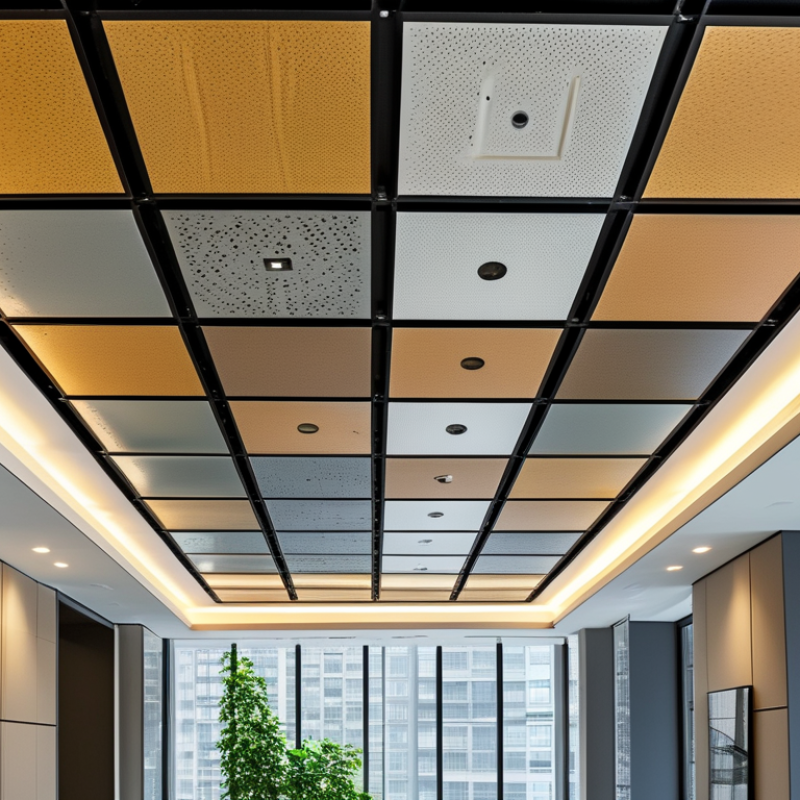
Installation method also affects performance. Exposed grid systems allow faster access for lighting, wiring, and ventilation. Concealed systems create a cleaner appearance but demand tighter measurements and more careful alignment. Direct fixing may suit solid concrete ceilings, while suspended installation provides space for services and acoustic treatment. Always check the panel’s weight, span, edge detail, and approved fixing distance against the existing structure. Do not rely on appearance alone.
On site, I have found that uneven substrates create the most avoidable problems. A few millimeters of movement can produce open joints, sagging, or visible shadows. I once underestimated the effect of moisture near a service area, and the layout needed revision. That experience reinforced the value of checking humidity, access routes, and future maintenance needs before installation. Leave room. Panels should remain removable where inspections are expected. Structural drawings, manufacturer data, and local building requirements should guide the final decision, but practical site conditions deserve equal attention. A technically correct panel can still be the wrong choice if installers cannot handle it safely or maintain the ceiling afterward.
Assess Acoustic, Thermal, Moisture, and Fire Resistance
Choosing a ceiling panel starts with the room’s risks, not its appearance.
In project reviews, I measure noise, temperature swings, humidity, and fire requirements before comparing finishes. Acoustic performance matters in open offices, classrooms, and clinics. Look beyond the absorption rating. Check the test method, panel thickness, edge detail, and complete ceiling system. A quiet panel can perform poorly when gaps surround light fittings. Small gaps matter.
Thermal performance supports comfort, but ceiling panels rarely solve insulation problems alone.
Review the roof assembly, ventilation, and expected indoor temperatures. In humid areas, inspect vapor control and condensation risk. Kitchens, pools, and washrooms need panels with suitable moisture resistance, stable edges, and cleanable surfaces. I once underestimated humidity near a service corridor. The panel stayed intact, but its appearance changed sooner than expected.
Fire resistance must be verified through documented testing for the exact assembly.
Do not confuse a panel’s reaction-to-fire rating with a fire-resistance rating. Ask for current declarations, installation limits, and approved suspension details. Local building codes and an independent professional should guide the final choice. Samples help, but field conditions are less forgiving. A practical mock-up can expose sagging, stains, or sound leakage before installation spreads the mistake.